Trying out different professions was somewhat of a hobby in my twenties. I once trained as a tour guide. I went on a vacation tour to Poland with a group that included the owners of the company and their families. What can I say? It was awful. I decided I preferred being a tourist to being a guide.
About Tatiana
Translation as a Way of Life
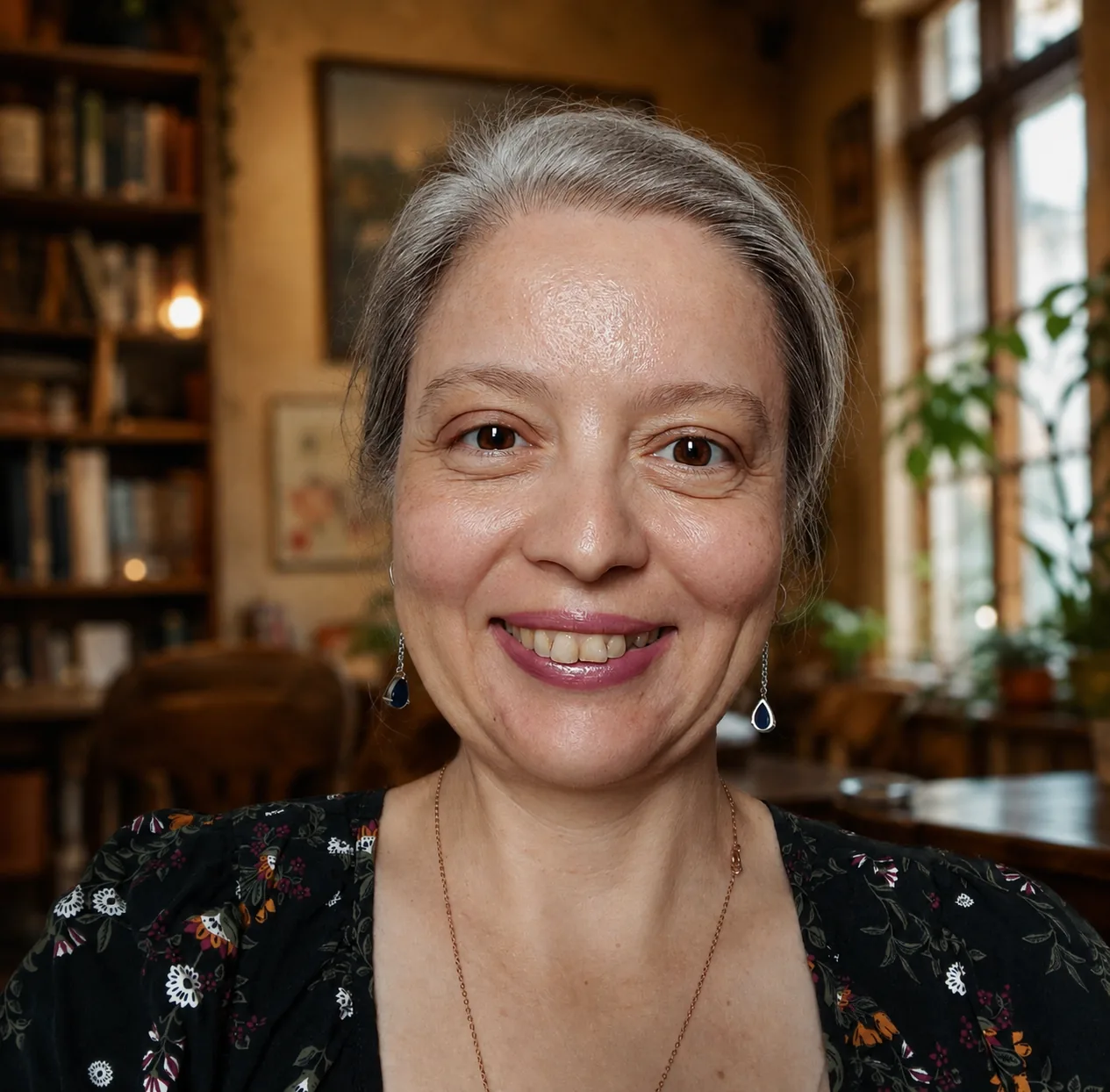
I became interested in foreign languages and cultures as a teenager because I wanted to know how people in other countries lived. International travel was far beyond anything available to me then, but languages offered another way across the distance. They showed me that translation is never simply replacing one word with another. A different language carries a different way of seeing—different meanings, assumptions, and possibilities. I came to understand that grammar does more than organize language: it gives the mind a structure through which it organizes—and therefore shapes—the reality it perceives. Each new language expanded the reality I knew. Since then, language learning has become my lifelong hobby.
I used those skills quite pragmatically, working as a translator and an assistant. But my curiosity did not stop with the worlds outside me. Questions arising in my own life gradually turned it inward. I wanted to understand what shapes the realities people live inside: the mind, emotions, relationships, symbols, and energy. That search led me through Socionics and graphology, then to Tarot, Космоэнергетика (Kosmoenergetika), and Jungian psychology. After moving to the United States, I went to graduate school for mental health counseling and later worked as a counselor and coach.
Looking back, I can see that translation became much more than a profession. I kept finding myself between different ways of understanding reality: languages and cultures, intuition and logic, spiritual knowledge and psychological theory, vision and practical form. Each could reveal something the others could not, and each became limiting when treated as the whole truth. My work is not to choose one side or flatten their differences. It is to remain between them long enough for a wider, more aligned possibility to become visible.
The contrast became clearest after I moved from Russia to the United States. Much of what I had learned in Russia—Tarot, energy work, and symbolic ways of understanding experience—moved freely, without a tightly defined professional container. Mental health counseling in the United States gave me a solid psychological foundation, a clear ethical framework, and a recognized structure for working with people. I valued all of that, but I also saw how easily the container could become smaller than the life it was meant to hold. I could not choose one world by cutting off what was alive in the other. A Tarot card reading might reveal an underlying pattern that ordinary conversation had not reached, while psychological knowledge could help trace how that pattern lived in a person’s emotions, relationships, and choices. Excluding either view meant losing part of what was actually present.
Later, traveling took me outside the structure of professional sessions and into the full complexity of daily life. Life could not be separated into neat categories: relationships, culture, practical circumstances, emotions, and energy continually shaped one another. In the years that followed, I turned most of my attention toward my own spiritual work. I had already spent years in therapy and self-examination, but this search took me deeper, beyond what traditional psychology and therapy had been able to reach. It may sound like a cliché, but I was searching for my soul. What I had learned was no longer a collection of theories or techniques. Life itself became the place where I tested what was true.
I did not sit down and decide to invent Life Architecture. It emerged slowly, as I began to see that the seemingly separate parts of my path had always belonged together. Translation had taught me to move between realities. Tarot and energy work had taught me to notice what is present but not visible. Psychology had given me ways to understand how inner patterns take form in emotions, relationships, and choices. My own spiritual search had taught me that none of these perspectives could hold a whole life by itself. Life Architecture became the place where they could meet without one being forced to disappear.
Today, I bring all of these ways of seeing with me when I sit beside another person. I listen across languages—the language of words, feelings, symbols, energy, and what moves beneath the surface—and look for relationships among things that may appear separate. I do not claim to know another person’s truth or to live their experience for them. I can offer a human mirror: observing, interpreting, and helping them see more of what is already there. That is what being a Life Architect means to me.
A few things about me
I almost never watch movies or shows. They bore me to death! Most of them repeat the same socially approved scripts in ways that may seem different on the surface, but have exactly the same architecture and belief systems underneath.
That’s why I prefer Formula 1. It’s a TV show that doesn’t end, and no screenwriter can come up with the things that really happen there.
I have 13 keyboards on my phone because I love learning languages. Even though I am only fluent in 4, I still like being able to write something simple in languages that I know only a tiny bit as a beginner.